
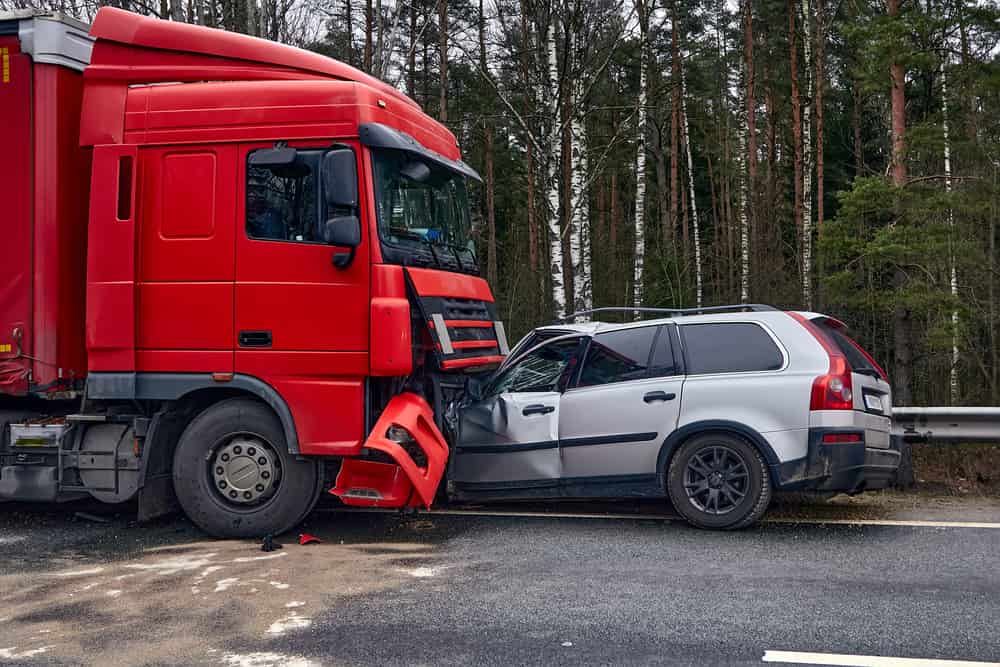

Truck accidents on I-5 through Tacoma, Washington can result in devastating consequences. Unfortunately, they happen more often than many drivers realize. This stretch of Interstate 5 is one of the busiest freight corridors in Washington, and when large commercial trucks collide with passenger vehicles, the results are often severe.
If you regularly drive I-5 through Tacoma, or were recently involved in a crash with a truck, knowing the risks and your options matters more than you may think. Let’s take a look at why these crashes happen, where they’re most likely to occur, and what you can do afterward to help you protect yourself and your loved ones.
Key Takeaways About Truck Accidents on I-5 in Tacoma
- I-5 through Tacoma is a major freight route with heavy commercial truck traffic day and night
- Truck crashes are more likely to cause serious injuries due to excessive size and weight factors
- Congestion, construction zones, and merging traffic increase accident risk
- Truck driver fatigue, distraction, and mechanical failures are common contributing factors
- If you’re injured in a truck accident, early treatment, documentation, and legal guidance can protect your rights
Why I-5 Through Tacoma Is Especially Dangerous for Truck Accidents
Interstate 5 is the backbone of the West Coast transportation system, and Tacoma sits at a critical junction along that route. The city connects freight traffic from the Port of Tacoma, nearby industrial centers, and Joint Base Lewis-McChord with Seattle and points north and south.
Several factors combine to make this section of I-5 particularly hazardous.
Heavy Commercial Truck Volume
Thousands of semi-trucks, delivery vehicles, and freight carriers travel through Tacoma daily. According to the Washington State Department of Transportation (WSDOT), I-5 carries some of the highest truck volumes in the state, especially near port and distribution hubs. More trucks on the road means more opportunities for dangerous interactions with passenger vehicles, especially during peak traffic hours.
Congestion and Bottlenecks
Tacoma’s stretch of I-5 includes multiple interchanges, curves, and lane reductions that slow traffic and create congestion. Sudden stops are common, and when large trucks are involved, stopping distances become a critical issue.
Rear-end collisions involving trucks frequently occur when traffic unexpectedly slows and a fully loaded tractor-trailer cannot stop in time.
Complex Merging and Weaving Areas
Areas where drivers enter or exit I-5, such as near downtown Tacoma and port access points, require quick lane changes. Trucks have larger blind spots and limited maneuverability, making these zones especially dangerous for nearby drivers.
The Data: Truck Accidents in Washington State
Truck crashes represent a smaller percentage of total collisions but account for a disproportionate number of serious injuries and fatalities.
According to the Washington Traffic Safety Commission, collisions involving large trucks are more likely to result in severe injuries or death compared to crashes involving only passenger vehicles. National data from the National Safety Council (NSC) shows that the majority of fatalities in large truck crashes are occupants of other vehicles, not the truck itself.
This imbalance highlights just how vulnerable passenger vehicle drivers are when sharing the road with commercial trucks on I-5.
Common Causes of Truck Accidents on I-5 in Tacoma
Truck accidents rarely have a single cause. Instead, they usually result from a combination of human error, mechanical issues, and roadway conditions.
Driver Fatigue
Long hours behind the wheel can impair reaction time, judgment, and awareness. Although federal hours-of-service rules limit how long truck drivers can operate without rest, fatigue remains a leading factor in serious crashes.
On long corridors like I-5, fatigued drivers may miss slowing traffic, drift between lanes, or fail to respond quickly to hazards. When a trucker closes their eyes for a few seconds, the truck can travel a long distance into another lane or slow traffic, leading to devastating crashes.
Distracted Driving
Commercial drivers are not immune to distractions. Navigation systems, dispatch communications, and mobile devices can all take attention away from the road, even for a moment, with catastrophic consequences.
Speeding and Following Too Closely
Large trucks require significantly more distance to stop. When drivers exceed speed limits or follow traffic too closely in congested areas, they may be unable to avoid a collision when traffic slows abruptly.
Improper Lane Changes
Blind spots around tractor-trailers are substantial. When a truck changes lanes without seeing a nearby vehicle — or when a car lingers in a blind spot — merging and sideswipe crashes can occur.
Mechanical Failures
Brake failures, tire blowouts, steering issues, and poorly secured cargo can all contribute to truck accidents. Regular inspection and maintenance are legally required, but lapses still happen.
Construction Zones and Their Role in Tacoma Truck Crashes
Construction has been a near-constant presence on I-5 through Tacoma in recent years. While improvements are necessary, work zones introduce additional risks.
Specifically, construction zones often involve:
- Narrowed lanes
- Reduced speed limits
- Sudden lane shifts
- Concrete barriers with little room for error
For trucks, these conditions are especially challenging. Limited space combined with heavy loads increases the risk of collisions with vehicles, barriers, or workers. WSDOT has repeatedly emphasized that speeding through work zones is a major contributor to serious crashes on I-5.
Weather Conditions That Increase Truck Accident Risk
Western Washington’s weather can significantly affect highway safety. When drivers don’t account for weather conditions and sudden changes in weather, accidents are more likely to occur.
Rain and Slick Roadways
Rain reduces tire traction and increases stopping distances, particularly for heavy trucks. Hydroplaning and jackknifing risks rise sharply in wet conditions.
Reduced Visibility
Fog, rain, and darkness can make it harder for drivers to judge distances and spot hazards. Large trucks need more time to react, and poor visibility can eliminate that margin.
Wind
Strong crosswinds, especially on elevated or open stretches of I-5, can destabilize high-profile vehicles such as semi-trucks, increasing the risk of rollovers.
Injuries Commonly Seen in Truck Accidents
Because of the size and weight difference between trucks and passenger vehicles, the automobile’s driver and passengers tend to experience more severe injuries than the truck driver.
Semi-tractor versus automobile or motorcycle crashes can cause common injuries, including:
- Traumatic brain injuries
- Spinal cord injuries and paralysis
- Internal organ damage
- Broken bones and crush injuries
- Severe burns or lacerations
Recovery can take months or years, and some injuries permanently alter a person’s ability to work or enjoy daily life. This is when a skilled Tacoma personal injury attorney can help protect your rights and fight for the compensation you need to improve your health and future.
What Drivers Can Do to Stay Safer Around Trucks on I-5
While you can’t control how truck drivers behave, you can take steps to reduce your risk.
Avoid Blind Spots
If you can’t see the truck driver’s mirrors, they likely can’t see you. Pass quickly and avoid lingering alongside trailers.
Increase Following Distance
Leave extra space between your vehicle and a truck. This gives you more time to react if traffic suddenly slows.
Be Cautious in Construction Zones
Slow down, stay alert, and expect sudden changes. Trucks need more room to maneuver, especially in narrow lanes.
Watch for Wide Turns and Lane Shifts
Trucks often need extra space to turn or change lanes. Anticipate these movements rather than reacting at the last second.
Adjust for Weather
Reduce speed and increase following distance in rain or poor visibility, especially near large trucks.
What to Do After a Truck Accident on I-5
If you’ve been involved in a crash with a commercial truck on I-5, the experience can be life-altering. In the moments and days that follow, you may be dealing with pain, shock, confusion, and uncertainty about what comes next. While every situation is different, taking the right steps as early as possible can protect your health and your ability to recover, physically, emotionally, and financially.
Seek Medical Attention Right Away
Your health should always come first. Even if you believe your injuries are minor, truck accidents often involve forces strong enough to cause internal injuries, head trauma, or spinal damage that may not show symptoms immediately. Adrenaline can mask pain in the hours after a crash, and some conditions worsen without prompt treatment.
Getting medical care right away helps:
- Identify injuries before they become more serious
- Create medical records that clearly link your injuries to the crash
- Support your recovery and long-term health
Follow all medical recommendations and attend follow-up appointments, even if symptoms seem manageable at first.
Contact Law Enforcement and Request a Police Report
Calling law enforcement ensures that an official accident report is created. This report documents key details, including the location, time, vehicles involved, and initial observations of how the crash occurred. In serious truck accidents, this report can serve as an important reference later
Document the Scene if You Can Safely Do So
If your injuries allow and it is safe, try to document the crash scene as thoroughly as possible. Photos and videos taken shortly after the accident can capture details that may later be lost or disputed.
Helpful things to document include:
- Vehicle damage and resting positions
- Skid marks or debris on the roadway
- Road conditions, signage, and weather
- The truck’s company name, DOT number, and license plates
If you are unable to do this yourself, a passenger, bystander, or loved one may be able to help.
Gather Witness Information
Independent witnesses can provide crucial perspectives about what happened before and during the crash. If anyone stopped to help or observed the collision, try to collect their names and contact information. Witness accounts can help clarify disputed facts and strengthen your understanding of how the accident occurred.
Be Cautious When Speaking With Insurance Companies
After a truck accident, you may be contacted quickly by insurance representatives — sometimes within hours or days. These conversations can feel routine, but it’s important to proceed carefully.
Before discussing details:
- Talk to an injury lawyer to understand what you should not discuss
- Avoid making statements about fault or minimizing your injuries
- Do not agree to recorded statements without understanding your rights
- Remember that early settlement offers may not reflect the true cost of your injuries
Working with a dedicated accident lawyer means they will deal with the insurance adjusters, allowing you to focus on your recovery instead of engaging in complex insurance discussions.
Understand Why Evidence Matters in Truck Accident Cases
Truck accidents are different from typical car crashes. They often involve multiple parties, including trucking companies, contractors, maintenance providers, and insurers. Critical evidence may include:
- Driver logbooks and electronic logging data
- Vehicle maintenance and inspection records
- Onboard data from the truck’s electronic systems
- Company safety policies and training records
Some of this evidence may only be preserved for a limited time. Acting promptly can help ensure important information isn’t lost before it’s reviewed.
Taking these steps doesn’t mean you have to have everything figured out right away. Partnering with experienced legal professionals protects your options while you focus on healing and moving forward after a serious truck accident.
Frequently Asked Questions About Tacoma Truck Accidents
Why does I-5 through Tacoma have so many truck crashes?
High freight volume, congestion, construction zones, and frequent merging areas all contribute to elevated crash risk along this stretch of I-5.
Who may be responsible after a truck accident?
Responsibility may extend beyond the driver to include trucking companies, maintenance providers, cargo loaders, or other parties, depending on the circumstances. A skilled lawyer can help you determine all possible at-fault parties after a commercial trucking crash.
Can I still pursue a claim if the truck driver wasn’t cited at the scene?
Yes. A lack of a citation does not automatically mean the truck driver or another party wasn’t responsible for the crash. Police officers often make quick assessments based on limited information available at the scene. Liability can still exist even when no ticket was issued.
What if my injuries worsen days or weeks after the truck accident?
This is very common in serious truck crashes. Injuries such as concussions, soft tissue damage, spinal injuries, or internal trauma may not fully reveal themselves immediately. If symptoms worsen or new issues appear, seek medical care as soon as possible and document these changes. Timely medical evaluation helps protect both your health and your ability to connect those injuries to the accident.
The Team at Jacobs & Jacobs Can Help After a Truck Accident on I-5 in Tacoma

Truck Accident Lawyer
If you or a loved one was injured in a truck accident on I-5 through Tacoma, you don’t have to face the outcome alone. These crashes can leave you facing serious injuries, lost income, and mounting stress, all while dealing with powerful insurance companies.
Call Jacobs & Jacobs at (253) 845-0577 for a free consultation today. Our team will listen to your story, explain your options, and help you take the next step toward protecting your health and your future.